
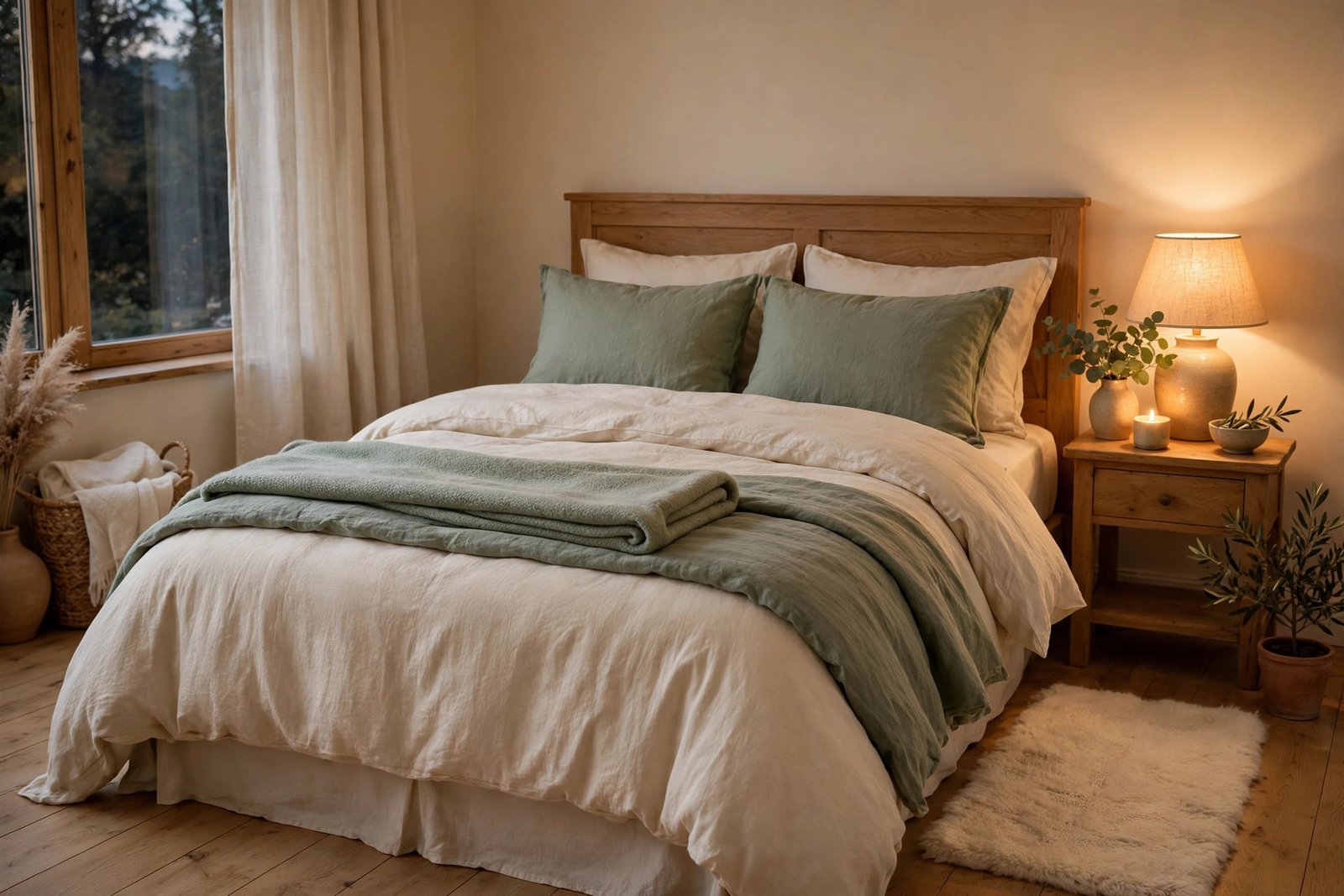

15 Cozy Bedroom Ideas That Feel Like a Hug
A cozy bedroom is not about spending a lot of money. It is about how the room feels when you walk in at the end of a long day — soft, warm, and calm.
You do not need a big room or new furniture to get that feeling. A few layers, a little warm light, and some soft textures can change everything. Most of the ideas below cost under $30, and many cost nothing at all.
The 15 ideas — layered bedding, throws, pillows, warm light, soft textures, warm colours, and a few personal touches — are grouped into the 10 sections below, so you can do one section at a time.
1. Layer the bedding — start with softness (Ideas 1–2)
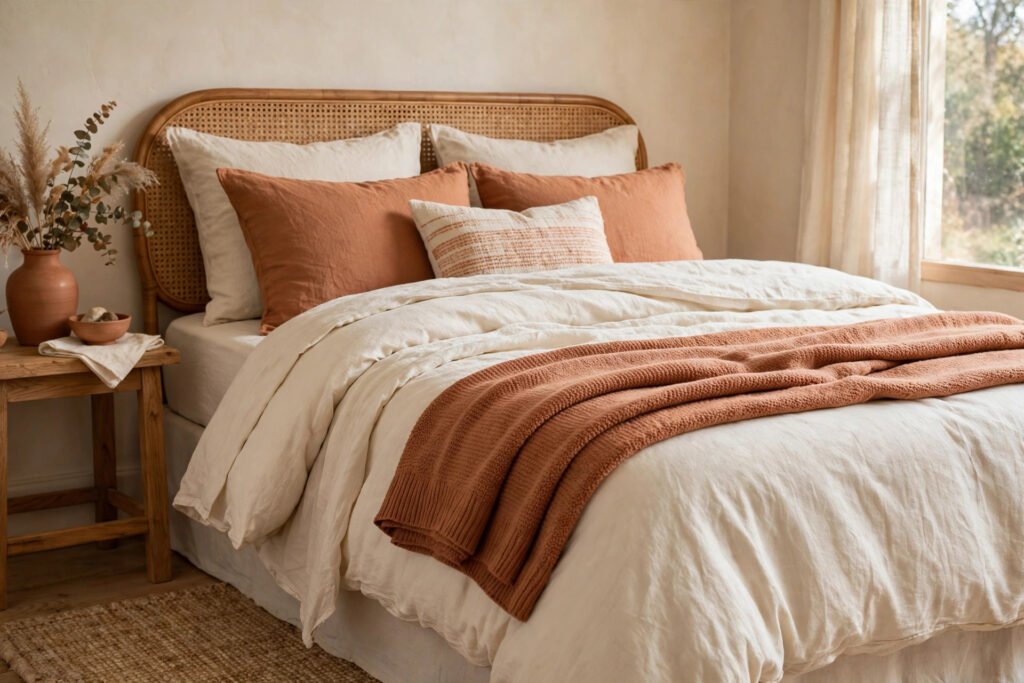
Cozy starts with the bed. Layer it the way you would layer clothes on a cold day: a plain fitted sheet, a light duvet or quilt, and then a soft throw folded across the foot of the bed.
That throw is idea 2, and it matters more than it looks. Choose one in a warm colour — cream, dusty rose, soft terracotta, or sage — and keep it where you can reach it. A $20–$30 throw in a soft fabric like fleece or cotton knit can make the whole bed look and feel warmer in seconds.
Think about materials, not just looks. Cotton breathes in summer, flannel feels warm in winter, and a light quilt works all year round in most American homes. Wash new bedding once before you use it — it softens the fabric and removes that stiff shop smell. A good place to start is your own linen closet: a quilt you already own, folded at the foot of the bed, often looks better than a new one. A common mistake is buying a very heavy duvet for a small, warm bedroom. It looks cozy in the shop, but you will push it off every night. Choose a medium-weight duvet and let the throw do the warming.
2. Pile on the pillows — but keep it simple (Idea 3)

Pillows are the fastest way to make a bed look inviting. Start with the two pillows you sleep on, then add two more in front of them — one or two in a soft texture, like velvet or knit, and one in a warm, solid colour.
You do not need six decorative pillows. Three or four in total is enough for a small or medium bed, and it means you will actually enjoy getting into bed instead of clearing pillows off it every night.
Pillow size matters more than pillow count. A standard pillow is fine for sleeping, while a square Euro pillow in front of it gives the bed its finished look. Mix one smooth cover with one textured cover — for example, plain cotton next to velvet — so the bed does not look flat. A mistake many people make is buying all their pillows in the same colour. One slightly darker or warmer cushion breaks the pattern and makes the bed look styled, not staged. If you have allergies, choose washable covers and a hypoallergenic filling, and keep just three pillows so dust has fewer places to hide.
3. Add one warm bedside lamp (Idea 4)
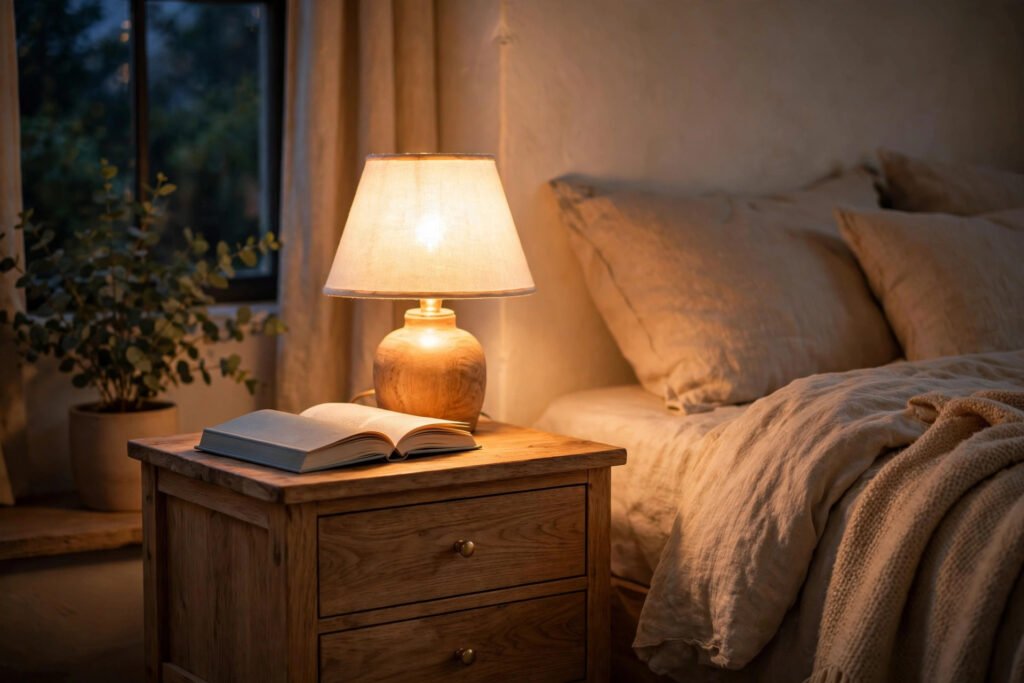
Warm light is the heart of a cozy bedroom. A small bedside lamp with a warm bulb (2700K) gives the room a soft golden glow that a bright ceiling light never can.
Look for a lamp with a simple white or cream shade. Thrift stores are full of them for $10–$20, and a new shade can make an old lamp look brand new. Put the lamp on your nightstand, close to the bed, so the light feels near you — not far away on the ceiling.
Turn the big light off in the evening and use just the lamp. You will feel the difference in five minutes.
The height of the lamp matters. The bottom of the shade should sit at about shoulder height when you are sitting up in bed, so the light falls on your book and not in your eyes. A lamp with a dimmer switch is worth the extra few dollars — you can turn it low for winding down and brighter for reading. When you thrift a lamp, check the cord, the switch, and the socket before you buy it, and choose a warm LED bulb so the shade never gets hot. A common mistake is using a daylight bulb in the bedroom. It is great for a home office, but in a bedroom it feels cold and clinical. Warm white, 2700K, is the cozy choice, and it costs the same as any other bulb.
4. Fairy lights and candles for a soft glow (Ideas 5–6)
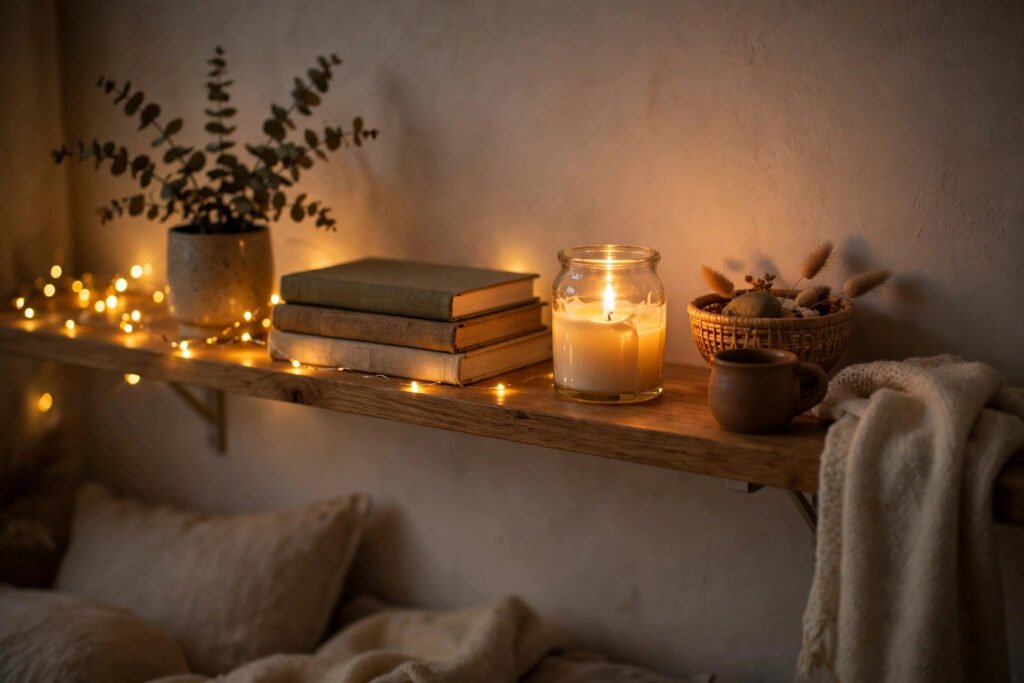
Fairy lights are not just for teenagers. A short string of warm white lights along a shelf, around a mirror, or behind the headboard adds a gentle glow that makes the whole room feel softer.
Candles do the same job in a different way. A real candle in a glass jar, or a battery candle if you prefer, on a nightstand or shelf adds warmth and a little flicker. Choose a calm scent like vanilla, lavender, or cedar — nothing too strong.
Place fairy lights where you can see them from the bed, not behind you. Around a mirror, along the top of a shelf, or behind the headboard all work well, because the glow reaches your eyes softly. Choose warm white lights, not cool white or coloured ones, and use a timer plug so they switch off by themselves. For candles, safety comes first: keep them away from curtains and bedding, never leave them burning when you leave the room, and use a sturdy holder. Battery candles are a good choice if you have children or pets, or if you fall asleep reading. Pair the light with a calm scent — vanilla with warm light, lavender with soft light — and the whole evening routine starts to feel like a small ritual.
5. Bring in soft textures everywhere (Idea 7)

Cozy is a feeling you touch, not just something you see. Mix soft textures: a chunky knit throw, a velvet cushion, a cotton quilt, and a soft rug. When your hands meet something soft every time you reach out, the room feels like a hug.
You do not need to buy everything at once. Add one texture at a time — a knit throw this week, a velvet cushion next month — and let the room build up slowly. Thrifted knit blankets and cushion covers are often just a few dollars and look beautiful once they are washed.
A simple rule helps with texture: mix three different textures, not three of the same. Try smooth cotton sheets, a chunky knit throw, and a velvet cushion. That contrast is what makes your hands want to touch things, and that is what cozy feels like. Buy textures you can wash easily — a throw you are afraid to wash will sit folded in a cupboard, not on your bed. Thrift stores, discount stores, and end-of-season sales are the best places to find knit throws and cushion covers for $5–$15. A mistake to avoid is mixing too many patterns at once. One pattern, like a simple stripe or a small floral, plus two plain textures, looks calm. Three busy patterns fighting each other looks restless, even if every piece is soft.
6. Put a soft rug where your feet land (Idea 8)
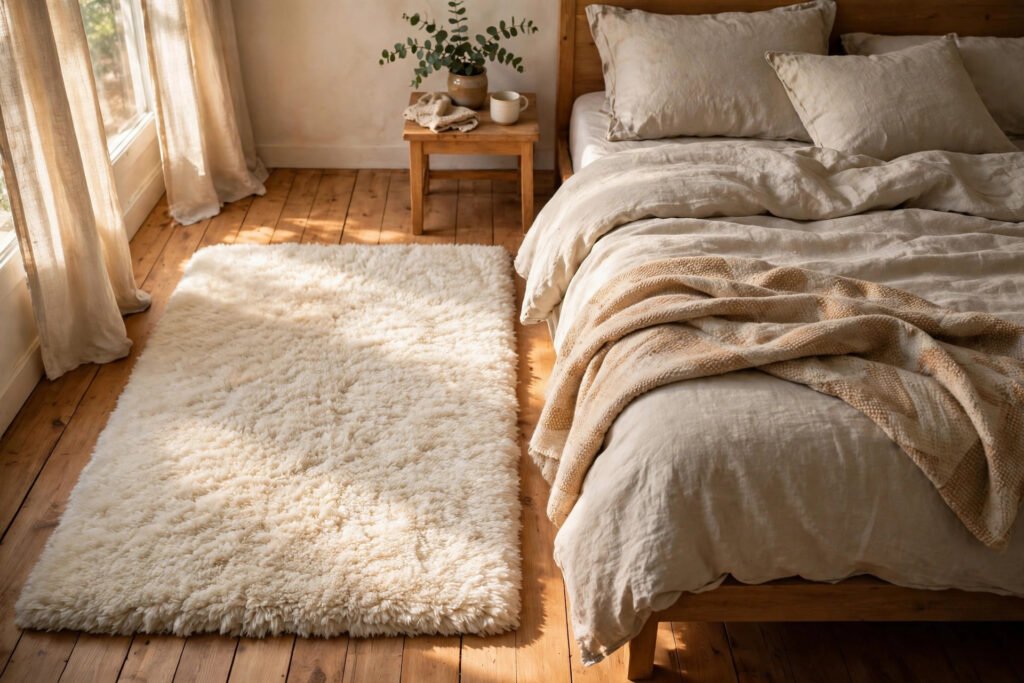
The first thing your feet touch in the morning should feel soft. A rug beside the bed does that, and it also warms up the whole room visually.
A 4×6 rug in a light, simple pattern is enough for most bedrooms. Choose a soft, low-pile rug you can walk on barefoot, in cream, warm beige, or a soft faded pattern. If you cannot afford a big rug, a small one just beside the bed still works — it is the spot your feet actually land.
A rug also softens sound, so the room feels quieter and calmer, especially in the evening.
Rug size and placement matter. The rug should reach from beside the bed to about halfway under it, so your feet land on something soft and the rug does not slide around. If a large rug is out of budget, buy a small runner for just one side of the bed — the side you get out of — and it will still change your mornings. A common mistake is choosing a rug that is too small and too dark. A small dark rug in the middle of a light floor looks like a mat, not a cozy layer. Go a little bigger and a little lighter than you think you need.
7. Use warm colours and wood tones (Ideas 9–10)
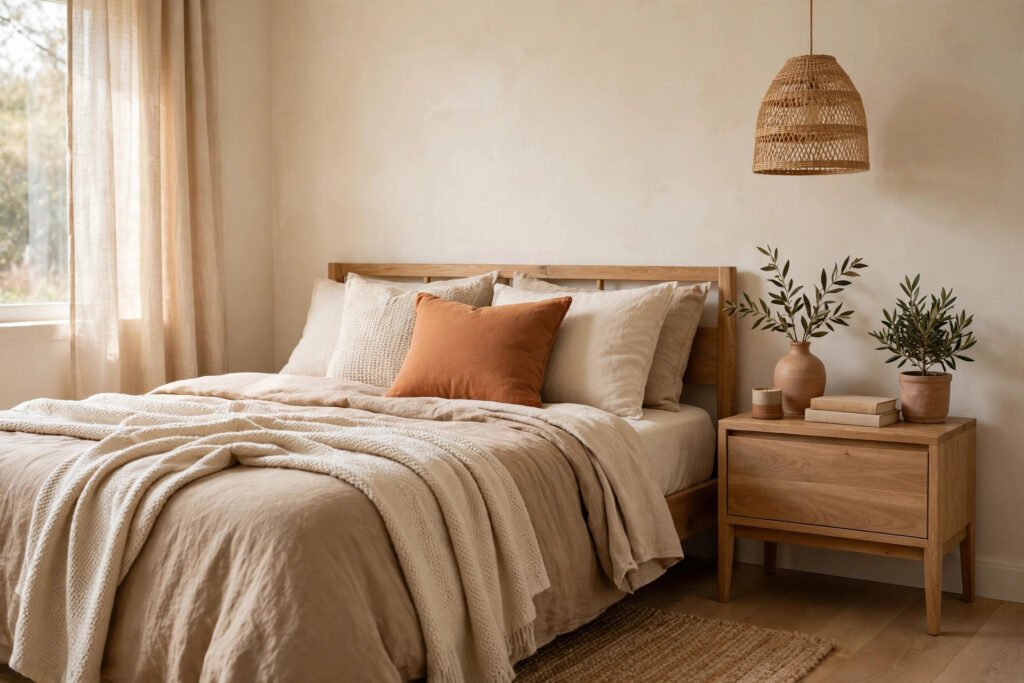
Colour sets the mood. Warm neutrals — cream, warm beige, soft terracotta, dusty rose, and pale sage — make a bedroom feel calm and warm. You do not have to repaint: switch your bedding, throw, and cushions to warm tones first and see how the room changes.
Wood tones are idea 10, and they work the same way. A wooden nightstand, a wooden picture frame, or a small wooden tray adds warmth that white plastic and metal never do. A thrifted wooden stool or side table, sanded lightly and left natural, can be the warmest thing in the room.
Start with a palette of three colours and repeat them. For example, cream walls, sage bedding, and terracotta cushions, or warm beige, soft rose, and natural wood. Paint a small swatch on the wall and look at it in the morning and in the evening before you commit, because warm light changes how a colour looks. Wood tones work best when they are similar — light oak with light pine, or warm walnut with warm teak — rather than a mix of pale and very dark wood in the same small room. A mistake to avoid is painting a whole small bedroom in a deep, dark colour because it looked cozy in a photo of a large room. In a small room, keep the dark colour to one accent wall or one piece of furniture, and let the warm light colours do most of the work.
8. Soften the windows with light curtains (Idea 11)
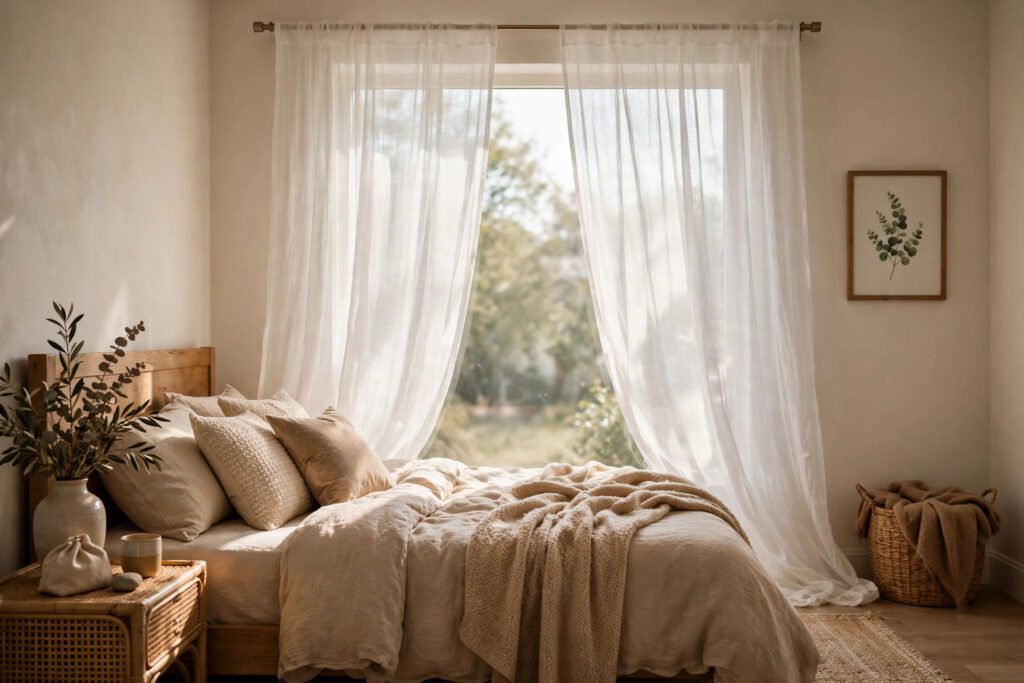
Heavy, dark curtains can make a bedroom feel closed in. Light curtains in white, cream, or pale linen let daylight through softly and make the room feel gentle, not dark.
Hang them a few inches above the window frame so the window looks taller, and let them fall to the floor. In the evening, they soften the lamplight too. If you already have curtains you like, just switching to a lighter colour can change the whole feeling of the room.
Sheer curtains alone work well in a bedroom that does not face a busy street. If you need privacy, layer a sheer panel behind a slightly heavier light curtain.
Curtain length changes the whole room. Curtains that just touch the floor look finished and elegant, while curtains that stop halfway down the window make the window look short. Measure from the rod to the floor before you buy, and wash or steam the curtains once so they hang straight. If you rent, a tension rod inside the window frame plus a light sheer panel is a renter-friendly option that needs no drilling. A common mistake is hanging the rod right on top of the window frame. Hang it four to six inches above the frame and a few inches wider on each side, and the window will look taller and wider than it really is. In winter, a slightly heavier linen-look curtain in a light colour keeps the draft out without making the room dark.
9. Add personal photos and art you love (Idea 12)

A cozy bedroom should feel like yours, not like a hotel room. One or two personal touches — a framed photo, a small piece of art, a postcard from a trip — make the room feel warm in a way no shop-bought decoration can.
Put one framed photo on your nightstand or one small gallery of two or three frames on the wall. Choose photos that make you smile, not photos you feel you should display.
Keep it small. One meaningful piece on the wall feels cozy. Ten small frames crowded together feel like clutter.
Choose frames that match each other loosely — the same wood tone, or all black, or all white — so the wall looks calm even if the photos are different. Hang art at eye level when you are standing, about 57 inches from the floor to the centre of the frame, which is the gallery rule most designers use. A mistake to avoid is hanging too many small frames in a row. One medium frame, about 16×20 inches, has more impact than six tiny frames crowded together. If you love a lot of photos, put them in one album on the nightstand instead of on every wall.
10. Scent, calm, and one cozy corner (Ideas 13–15)
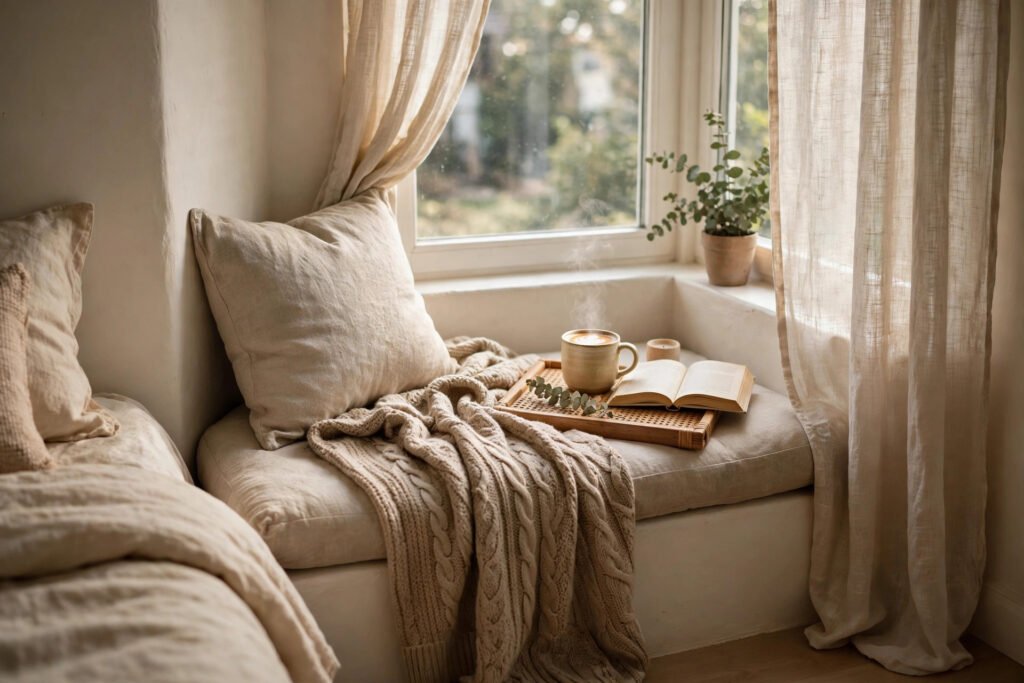
The last three ideas work together. Idea 13 is scent: a candle, a small diffuser, or a linen spray in a calm scent like lavender or vanilla. Scent is invisible, but it is one of the strongest ways to make a room feel relaxing.
Idea 14 is calm: keep the surfaces clear. A nightstand with just a lamp, a book, and a glass of water feels cozy. The same nightstand covered in chargers, papers, and clutter does not. Spend five minutes each evening clearing the top of your nightstand and dresser, and the room will feel calmer every morning.
Idea 15 is a cozy corner: one small spot just for you. It can be as simple as a cushion on the floor by the window, a small chair with a throw, or a tray on the bed with a book and a warm drink. You do not need a whole reading nook — just one corner that says, slow down, this is your place.
For scent, start small. One candle, one diffuser, or one linen spray is enough — two strong scents at once can give you a headache instead of calm. Lavender helps many people wind down, vanilla feels warm and sweet, and cedar or sandalwood feels grounding. For your cozy corner, you do not need new furniture. A cushion on the floor by the window with a throw, or a small tray on the bed with a book and a mug, is a corner. Keep a book you are actually reading there, not a book you think looks good. The most common mistake here is trying to do everything at once — scent, candles, lights, and a new chair in one weekend. Pick one, live with it for a week, and then add the next. Cozy builds slowly, and that is why it lasts.
A simple under-$250 cozy refresh plan
You do not need to do all 15 ideas at once. Try this order:
- Weekend 1 ($0–$60): Layer the bedding, add the throw and pillows you already own, and clear the nightstand and dresser.
- Weekend 2 ($40–$90): Add a warm lamp, a soft rug, and one string of fairy lights or a candle.
- Weekend 3 ($40–$100): Add a knit texture, light curtains, and one personal framed photo or piece of art.
Total: roughly $80–$250, depending on what you thrift and what you already own.
Take a photo before you start and one after each weekend. The change is often bigger than you expect — especially in the evening, when the warm light comes on.
If money is tight, stretch the plan to a month instead of three weekends. The order still works — bed first, light second, texture and personality last — and the room gets cozier every week.
Final thought
A cozy bedroom is not a perfect bedroom. It is a soft bed, warm light, and a room that feels calm when you walk in.
Start with the bedding and the lamp. Add one soft texture and one personal touch. Then stop, and enjoy the room. That is the whole formula — and it feels like a hug every single night.
And remember, cozy does not mean cluttered, and it does not mean expensive. It means the room works for you: a bed you want to get into, light that feels kind in the evening, and one corner that is just yours. If you try only three ideas from this post, try layered bedding, a warm lamp, and a clear nightstand. Those three alone change how a bedroom feels, and they cost less than a dinner out. Then, when you are ready, add one soft texture at a time. In a few weeks, you will walk into your bedroom at the end of a long day and feel what this post is about — not a perfect room, but a room that feels like a hug.
