
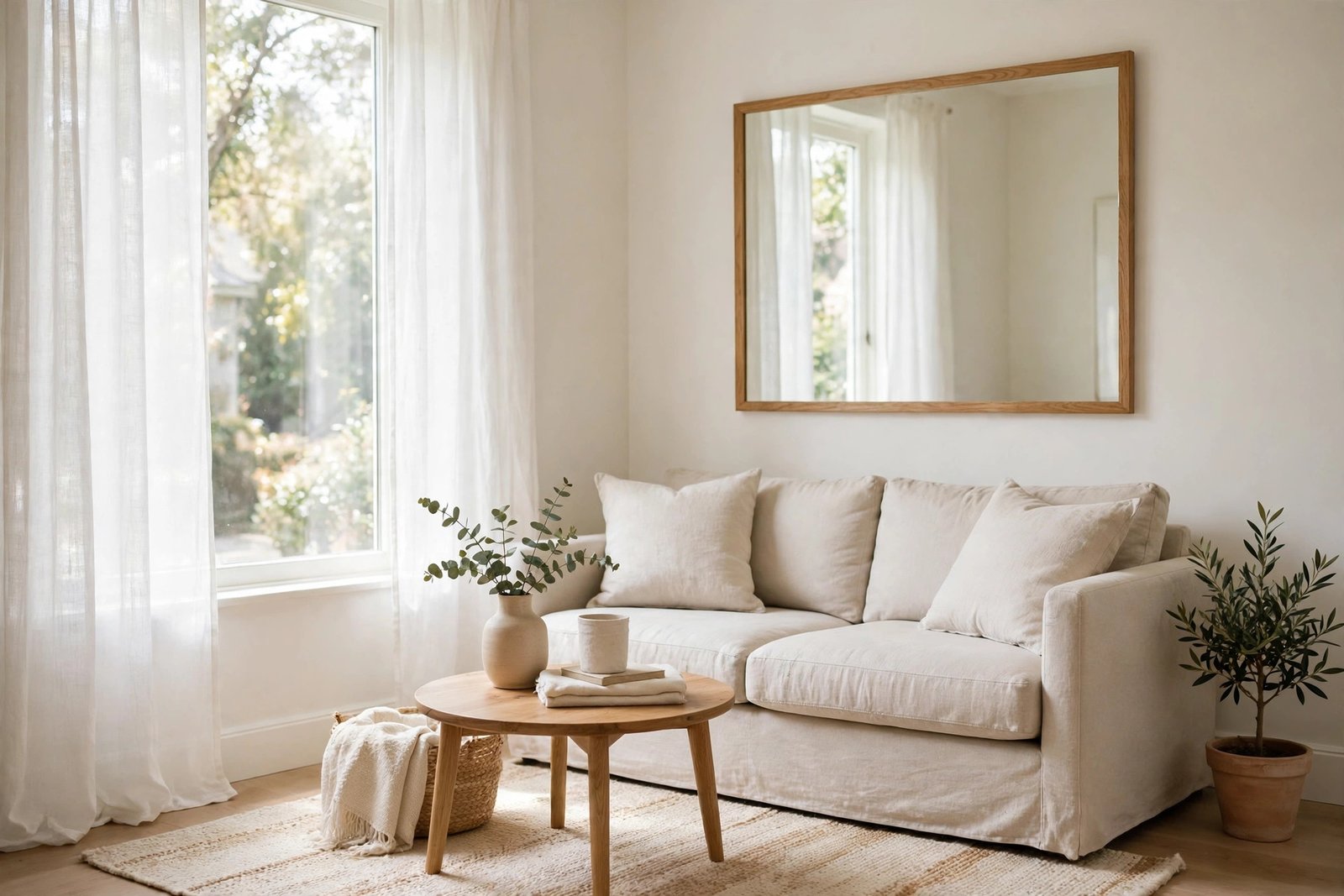

Small Living Room Ideas: 12 Ways to Make It Look Bigger
A small living room is not a problem. It is a cozy room that just needs the right tricks to feel open instead of crowded.
You do not need to knock down a wall or buy all new furniture. Light colours, one good mirror, furniture that fits, and a clear floor can make the same room look and feel much bigger.
The 12 ways — light colours, a mirror, smart furniture, vertical storage, the right rug, sheer curtains, one focal point, and a smart layout — are grouped into the 10 sections below.
1. Use light colours on the walls and sofa (Way 1)
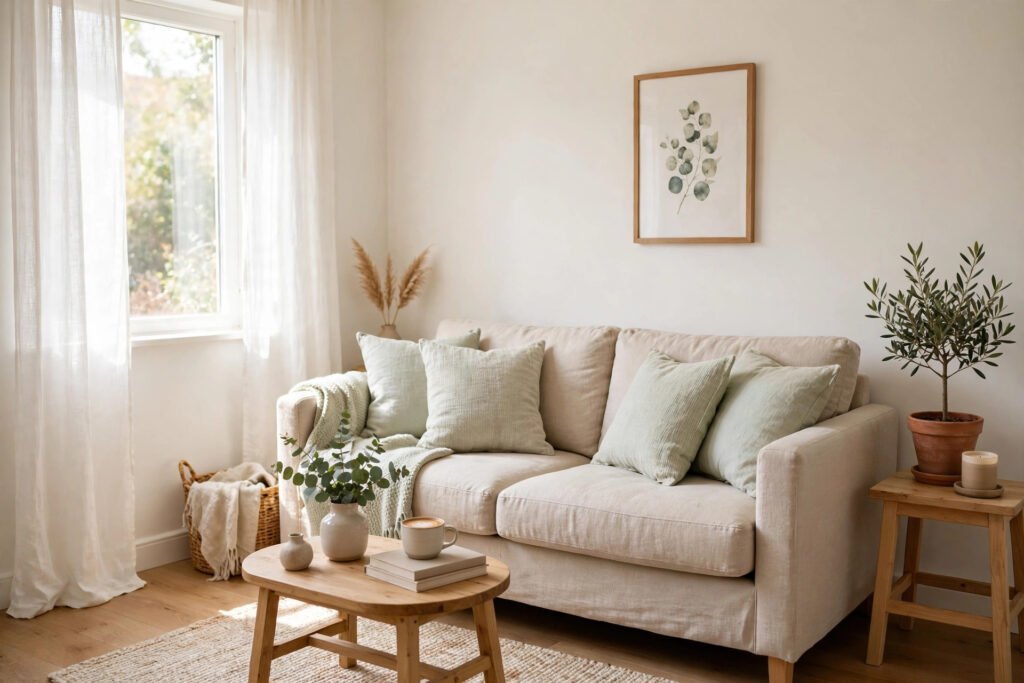
Light colours are the simplest way to open up a small living room. Warm white, soft beige, pale grey, and light sage reflect daylight and make the walls feel further away.
You do not have to repaint the whole room. Keep the walls light and choose a light sofa, light cushions, or a light rug instead. If your sofa is dark, a light throw draped over the back and light cushions in front of it can soften the whole look for under $40.
Start with the biggest surfaces, because they set the tone. Walls, sofa, and rug cover most of what your eyes see, so if those three are light, the whole room reads as light. If you rent and cannot paint, a light slipcover is the next best thing — a washable cotton slipcover in warm white or light beige costs $40–$80 and can be removed and washed. A common mistake is choosing a colour from a tiny paint chip in the shop. On a whole wall, that colour will look much stronger than it did on the chip. Go one shade lighter than you think you need, especially in a room with only one window.
2. Hang one large mirror where it catches light (Way 2)
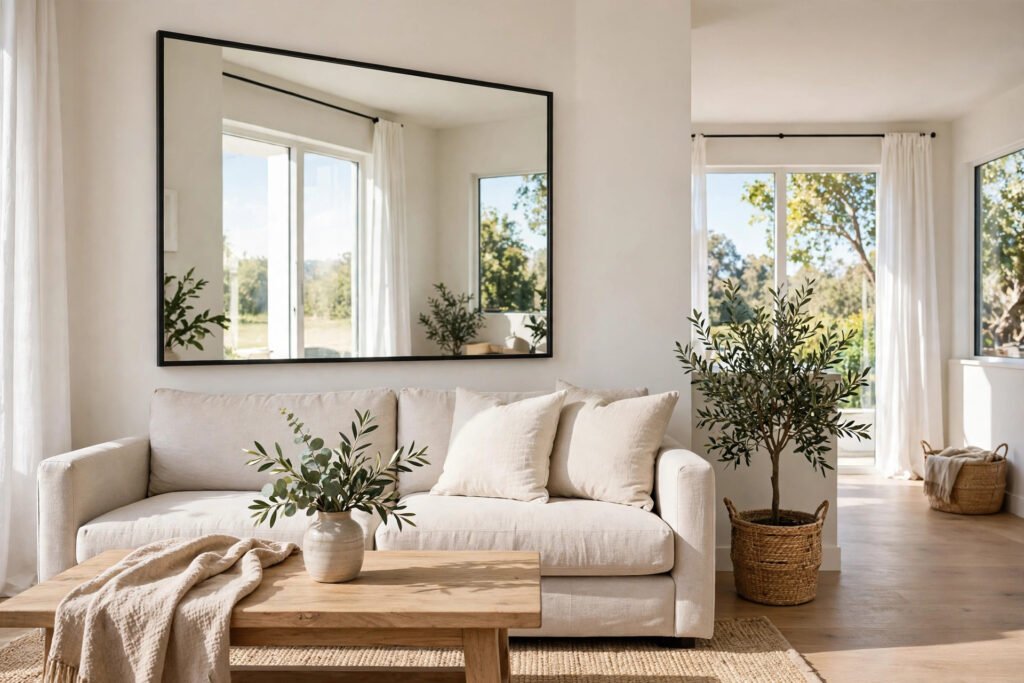
A mirror is the cheapest way to make a small living room look bigger. Hang one large mirror opposite a window, or lean a tall mirror against the wall near the sofa. It bounces daylight around the room and doubles the feeling of space.
Thrift stores and Facebook Marketplace are great for this — a simple large mirror often costs $20–$40 second-hand. Skip the small decorative mirrors; one big one works better than five tiny ones.
The best place for a mirror is opposite the window, or on the wall next to it, so it catches daylight and throws it across the room. A mirror opposite a blank wall does far less. If you lean a tall mirror against the wall, anchor it at the top with a small bracket so it cannot tip — especially if you have children or pets. A mistake to avoid is hanging a mirror too high. Its centre should sit at about eye level, around 57 to 60 inches from the floor, so it reflects the room and not the ceiling. And keep the wall around it simple: one mirror on a calm wall works harder than a mirror crowded by small frames.
3. Choose low furniture with visible legs (Ways 3–4)
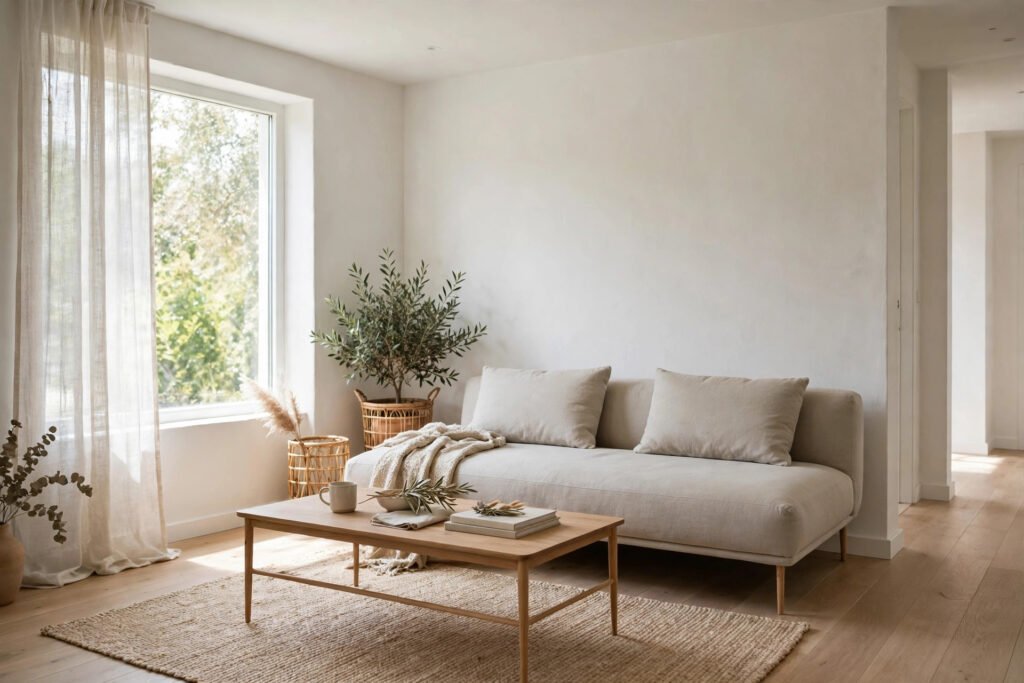
Low furniture makes a room feel taller, because you see more wall above it. A low sofa, a low coffee table, and a low TV stand all help a small living room feel open instead of boxed in.
Visible legs are way 4, and they work the same way. Furniture that sits on slim legs lets you see the floor underneath it, so the room feels less crowded. A sofa on legs, a coffee table on legs, and a chair on legs all add up to a much airier feeling.
If your sofa has a solid base to the floor, you do not have to replace it. Just choose a coffee table and side table with legs, and keep the space under them clear.
Low furniture works because it leaves more wall visible above it, and visible wall makes a ceiling feel higher. A sofa with a back height of 32 to 34 inches feels lower and more open than a tall 38-inch back. The same goes for the TV stand: a low, wide stand looks calmer than a tall, narrow one. When you shop, sit on the sofa and check the seat depth too — a very deep seat eats floor space and makes a small room feel full. A common mistake is buying a recliner or a bulky armchair because it looked comfortable in a big showroom. In a small living room, a slim armchair with visible legs gives you almost the same comfort and leaves far more floor visible. If you already own a bulky piece, try moving it to the longest wall and keeping the space in front of it completely clear.
4. Pick furniture that does two jobs (Way 5)
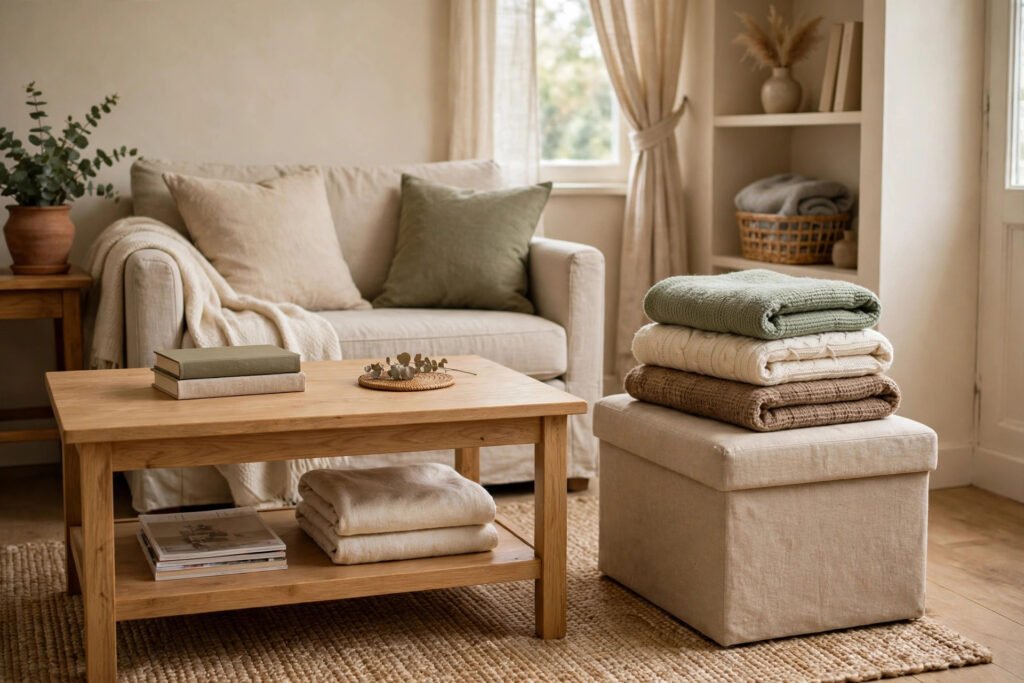
In a small living room, every piece should earn its place. A storage ottoman holds blankets and works as a coffee table. A sofa bed gives guests a place to sleep. A coffee table with a shelf underneath holds books and remotes.
Look for pieces with hidden storage: an ottoman that opens, a side table with a drawer, a TV stand with closed doors. They keep everyday things out of sight, which makes the room look bigger instantly.
Good two-job furniture is easy to spot once you know what to look for. A storage ottoman should open easily with one hand and hold at least two folded blankets. A coffee table with a shelf should have enough height under the shelf for books, not just a thin slot. A sofa bed should be easy to open — if it takes two people and ten minutes, you will never use it. A mistake to avoid is buying furniture with storage you cannot reach. A deep, lidless basket under a table looks tidy in a photo, but if you have to move three things to reach it, you will stop using it. Storage only works if it is easy to open and easy to close.
5. Go vertical: use the walls, not the floor (Way 6)
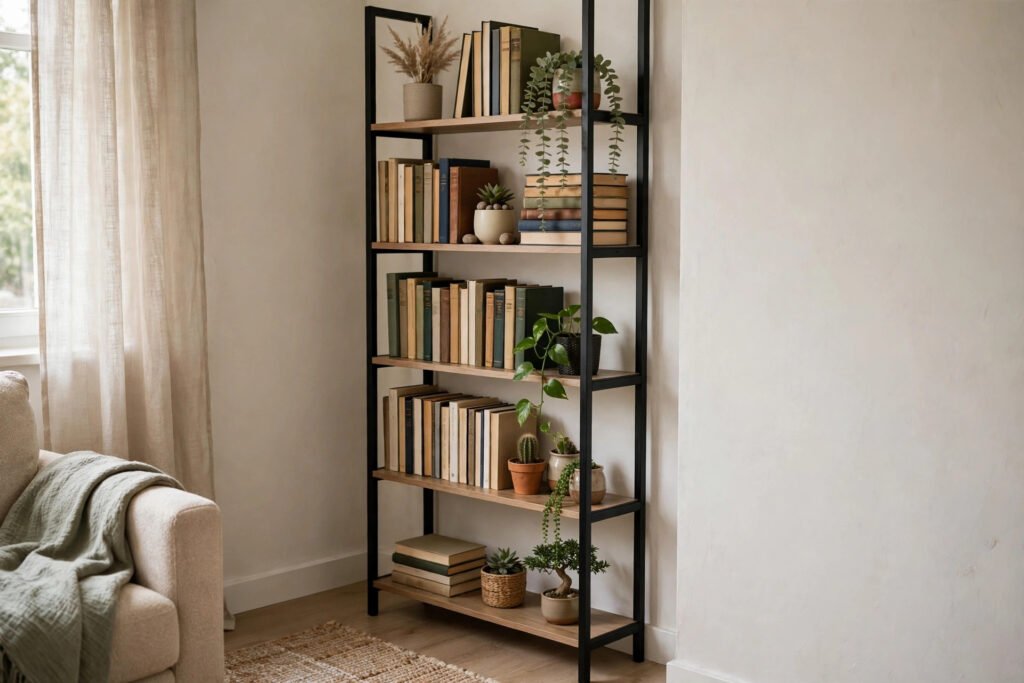
When floor space is tight, the walls are your best friend. Add one floating shelf, a row of hooks, or a tall, slim bookshelf in a corner. Vertical storage keeps books, plants, and everyday things within reach without adding another bulky piece of furniture.
A tall bookshelf in a corner uses almost no floor space and draws the eye upward, which makes the ceiling feel higher. Keep the shelves tidy — one shelf with three or four items looks calm, while a shelf crowded with small things looks cluttered.
Wall-mounted lighting also helps here. A wall lamp or a shelf with a small light frees up table space and adds warmth without taking up floor space.
Start vertical storage in one place, not everywhere. One tall bookshelf in a corner, or one floating shelf above the sofa, is enough to start. Put the things you use every day at arm height, and the things you rarely use up high. Keep each shelf to three or four items, with some empty space between them — empty space is what makes a shelf look styled instead of stuffed. Wall-mounted lights help here too: a small wall lamp above a shelf frees up table space and adds a warm glow at the same time. A common mistake is filling every wall with shelves. Two or three shelves in a small room is plenty. More than that, and the walls start to feel busy, which makes the room feel smaller, not bigger.
6. Choose the right rug — and keep the floor clear (Way 7)
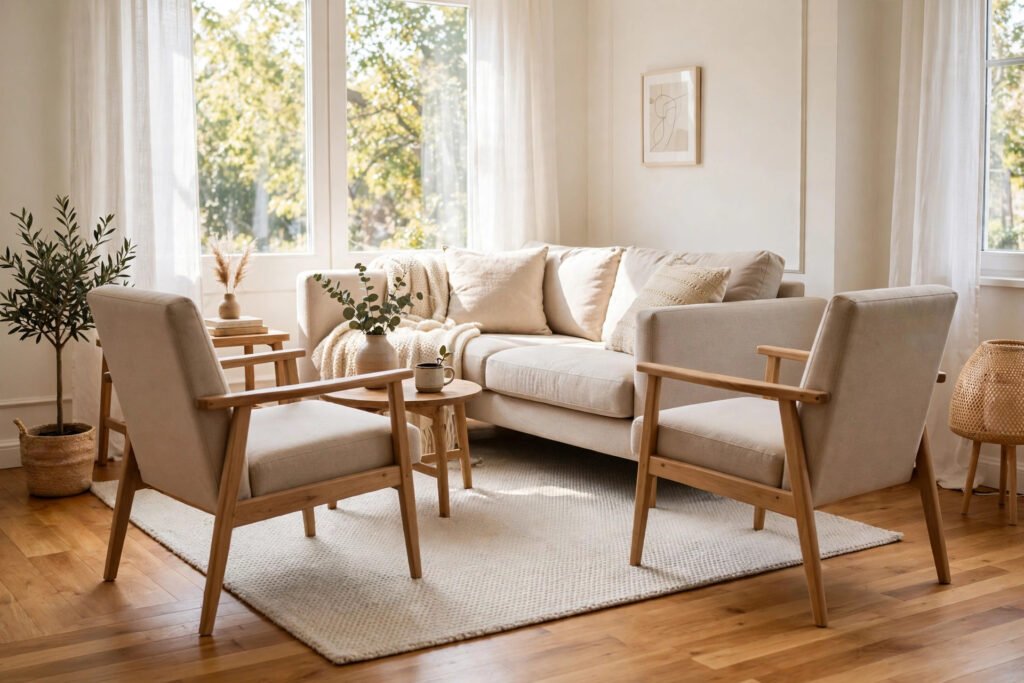
A rug can make a small living room look bigger or smaller, depending on its size. The rule is simple: the rug should be big enough for the front legs of the sofa and chairs to sit on it. A rug that is too small makes the room look chopped up.
A 5×7 or 6×9 rug in a light, simple pattern works for most small living rooms. Light colours open the room up, and a simple pattern keeps it calm.
Then keep the floor clear around it. Tuck shoes into a basket by the door, keep toys and blankets in a storage ottoman, and leave walking space open. A clear floor makes the room feel bigger the moment you walk in.
To choose a rug, measure first. In most small living rooms, a 5×7 rug works if the sofa is a loveseat, and a 6×9 works if the sofa is a full three-seater. The front legs of the sofa and chairs should sit on the rug, with at least six inches of rug in front of them. A mistake to avoid is buying a rug that is too small because it is cheaper. A too-small rug chops the floor into pieces and makes the room look smaller than no rug at all. Save for the right size, or check thrift stores first — a plain, light rug in good condition is one of the best second-hand finds.
7. Hang sheer curtains high and wide (Way 8)
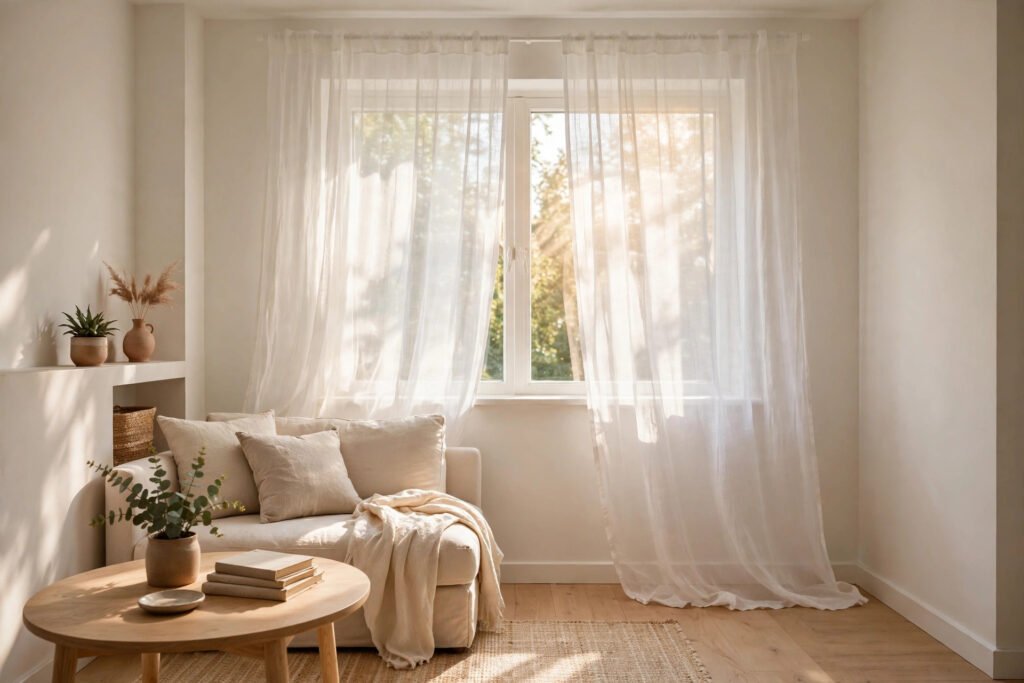
Heavy, dark curtains close a small living room in. Light, sheer or linen-look curtains let daylight through and make the window feel taller.
Hang the curtain rod a few inches above the window frame and a little wider than the window itself. This simple trick makes the window — and the room — look bigger, and it costs nothing if you reuse a rod you already have.
White, cream, or pale linen curtains work with almost every living room style. If you need privacy in the evening, layer a sheer panel behind a slightly heavier light curtain.
Curtain fabric matters as much as colour. Sheer linen lets light through softly and moves a little in a breeze, which makes a room feel alive. A heavier linen-look curtain in a light colour gives more privacy and still feels light. If you rent, a tension rod inside the window frame plus a sheer panel needs no drilling and comes down easily when you move. A common mistake is buying curtains that are too short. Curtains that stop at the windowsill make the window look small; curtains that touch the floor make it look tall. Measure from the rod to the floor before you order, and add two inches if you are unsure — slightly long is better than slightly short.
8. Choose one focal point, not five (Way 9)
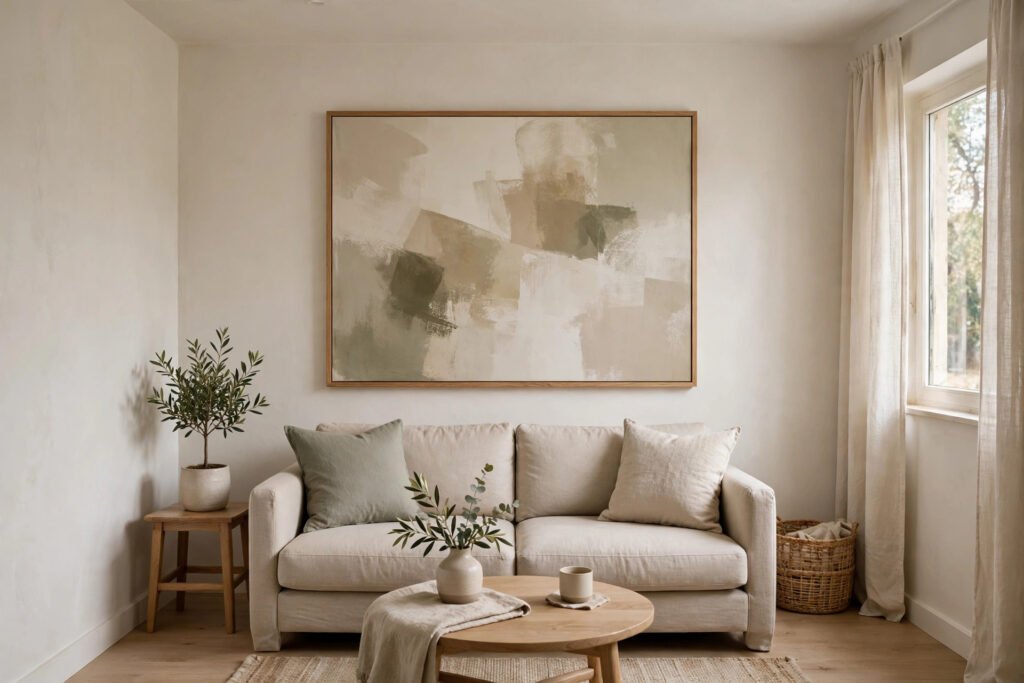
Every living room needs one place for the eye to rest. It could be the sofa wall, a piece of art, the TV, or a fireplace. Pick one, and let everything else support it.
When a small room has five focal points — a big TV, a bold rug, a gallery wall, a bright sofa, and a statement lamp — the eye does not know where to look, and the room feels busy and small. With one focal point, the room feels calm and open.
To choose your focal point, stand in the doorway and notice where your eyes land first. That is usually the natural focal point — often the sofa wall or the TV wall. Build around it: put your best piece of art there, or the mirror, and keep the other walls quieter. If the TV is the focal point, mount it on the wall instead of putting it on a stand, because that frees up floor space and looks cleaner. A mistake to avoid is making the focal point too busy. One large piece of art, about 24×36 inches, has more impact than a gallery of ten small frames. And do not fight the room: if the fireplace is the natural focal point, arrange the seating around it, even if that is not how the previous owner arranged it.
9. Get the right-size sofa and a smart layout (Ways 10–11)
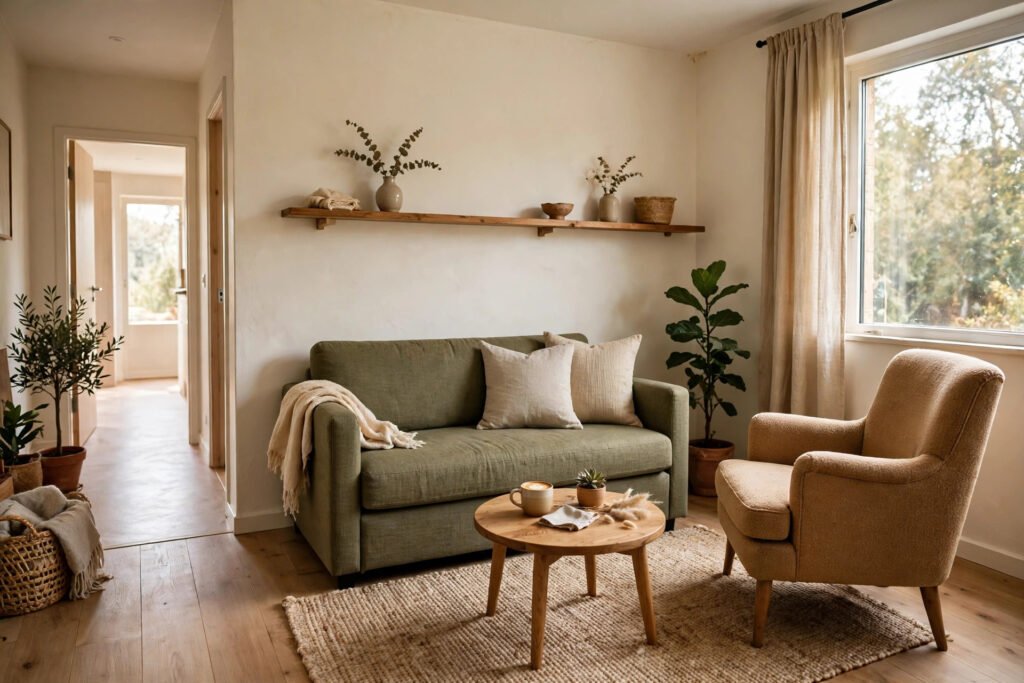
A sofa that is too big is the most common mistake in a small living room. Measure your room before you buy, and leave at least 30 inches of walking space around the sofa. A loveseat or a compact two-seater often fits better than a full three-seater, and it leaves room to breathe.
Layout is way 11, and it costs nothing to change. Push the sofa against the longest wall, not in the middle of the room. Leave a clear path from the door to the seating area. Angle one chair slightly toward the sofa instead of lining every piece up against a wall — it makes the room feel designed, not just filled.
Try moving the furniture before you buy anything new. Sometimes a better layout is all the room needs.
Measure the room before you shop for a sofa, and write the numbers down. Leave at least 30 inches of walking space in front of the sofa and 18 inches between the sofa and the coffee table — that is enough to walk past and to put your feet up. A loveseat is usually 52 to 58 inches wide, a compact sofa 72 to 78 inches, and a full three-seater 84 inches or more. In a room under 12 feet wide, a loveseat plus one chair often fits better than a three-seater plus a loveseat. For layout, try the sofa on the longest wall first, then try it facing the window for a day and see which feels better. A common mistake is pushing every piece against a wall. Pulling the sofa a few inches off the wall, or floating one chair at an angle, makes the room feel designed instead of just filled.
10. Declutter, hide storage, and layer the light (Way 12)
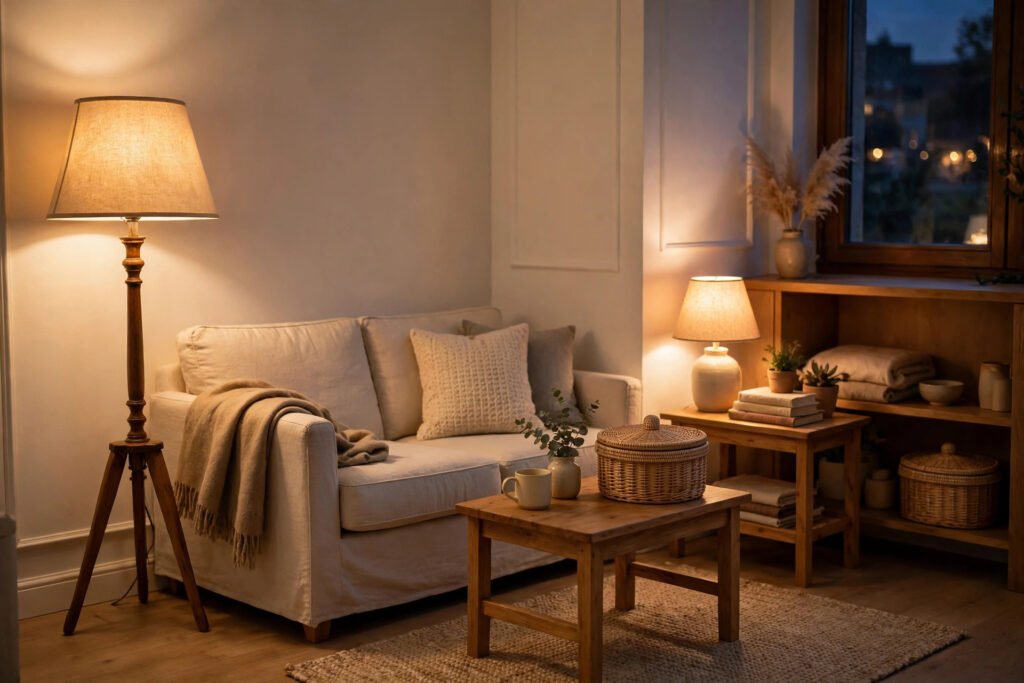
The last way brings it all together. Declutter first: remove anything you do not use every week. A small living room with ten things in it feels bigger than the same room with thirty things in it.
Hide what is left in closed storage — a basket with a lid, a cabinet, or a storage ottoman. Open shelves look nice, but closed storage makes a small room look calmer.
Then layer the light: a floor lamp in one corner, a table lamp on a side table, and daylight during the day. Two or three soft light sources make the room feel warm and open, while one harsh ceiling light flattens it. Warm bulbs (2700K) feel softer than bright white ones.
Decluttering works best in small rounds. Everything else goes into a box for a month; if you do not open the box, donate it. Closed storage is your friend: a basket with a lid, a cabinet with doors, or a storage ottoman hides the everyday mess that makes a small room look small. For light, use three sources: a floor lamp in a corner, a table lamp on a side table, and daylight. Warm bulbs, 2700K, feel softer than bright white ones, and a dimmer switch on one lamp lets you lower the light in the evening. A mistake to avoid is decluttering once and stopping. Small rooms need a five-minute tidy every evening — put the remotes back, fold the throw, clear the coffee table — and the room stays open instead of slowly filling up again.
A simple under-$300 living room refresh plan
You do not need to do all 12 ways at once. Try this order:
- Weekend 1 ($0–$50): Declutter, rearrange the layout, and clear the floor.
- Weekend 2 ($50–$120): Add a large mirror, light curtains, and a light throw and cushions.
- Weekend 3 ($50–$130): Add the right-size rug, one vertical shelf or storage ottoman, and a warm floor or table lamp.
Total: roughly $100–$300, depending on what you thrift and what you already own.
Take a photo before you start and one after each weekend. The before-and-after is not just satisfying — it is also perfect for Pinterest.
If money is tight, stretch the plan to a month and buy one thing per weekend. The order still works — clear and rearrange first, light second, rug and storage last — and the room gets bigger-feeling every week.
Final thought
A small living room is not a small life. It is a cozy room waiting for a few smart choices.
Start with light, a mirror, and a clear floor. Add furniture that fits and does two jobs. Finish with one focal point and warm light. That is the whole formula — and it works on a budget.
And remember, a small living room does not need to look empty to feel big — it needs to look intentional. Every piece should have a reason to be there, and every surface should have a little breathing room around it. If you try only three ways from this post, try a large mirror, a right-size rug, and a clear floor. Those three alone change how a living room feels, and they cost less than a new sofa. Then, when you are ready, add one piece of furniture that does two jobs and one warm lamp. In a few weeks, you will walk into your living room and notice something simple: it feels bigger, calmer, and more like home — and you did not knock down a single wall to get there.
